A lot changed at The Workplace Event this year.
Cleaning had a seat at the table, not just on the floor, but in the conversation. It had more presence, more recognition, and a genuine acknowledgement that a clean, well-maintained environment is not a footnote in facilities; it’s part of how a workplace performs and how people feel inside it.
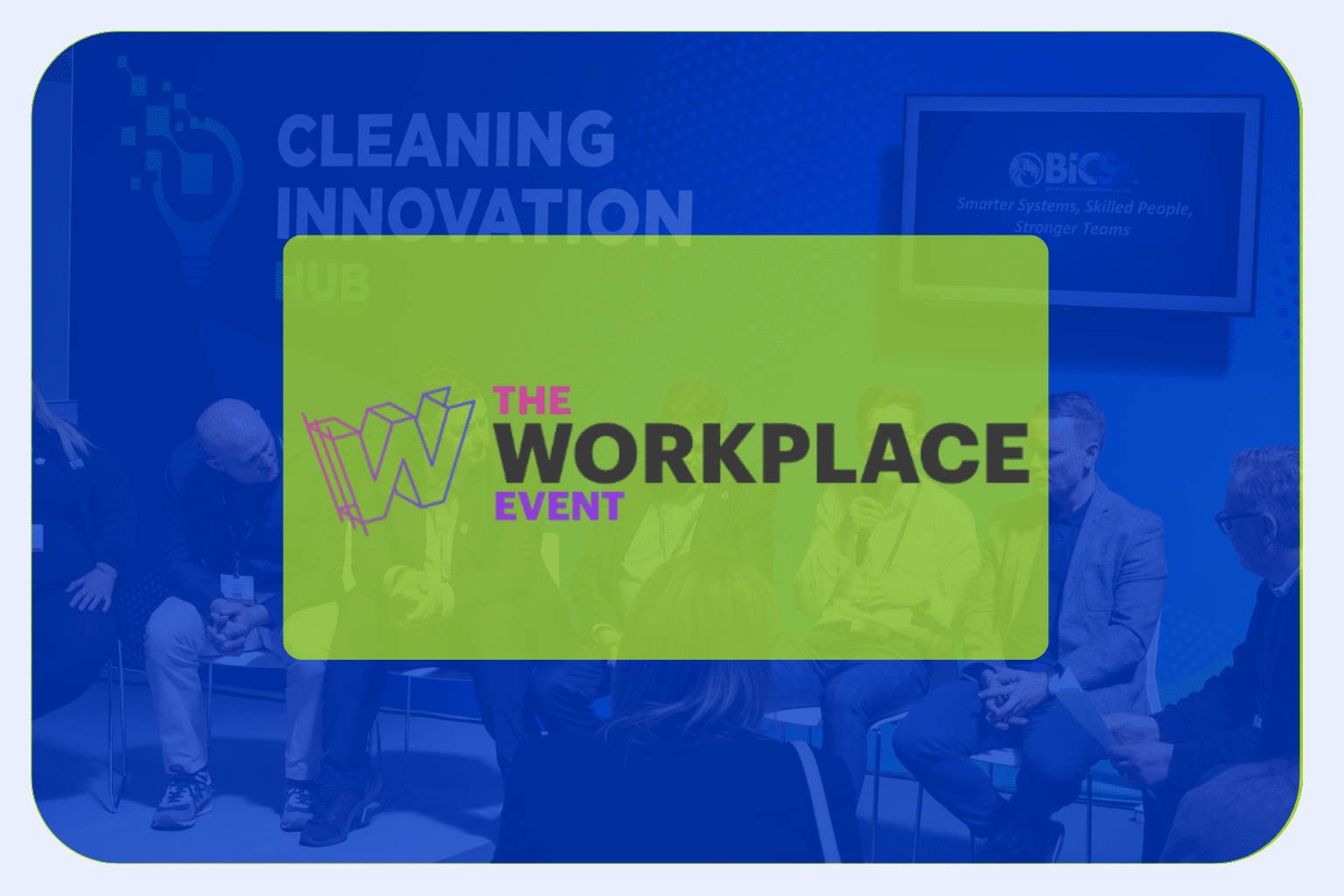
The harder conversation is the one our MD, Darryl Penson, was part of on the panel, the one about whether the industry is actually ready for the attention it’s starting to get.
The Pitch and the Delivery
Compliance equals excellence, and excellence wins business.
That’s not a hopeful statement, but it’s a competitive one.
Plenty of cleaning companies are chasing smarter systems, better technology, sharper data, and investing in platforms and tools.
But something Darryl’s raised brings it back down to earth;
“Smarter systems without skilled people cannot create stronger teams.”
You can automate a schedule, but you cannot automate judgment, and you cannot automate the care it takes to run your finger under a bench and actually notice the dust that’s there.
Not many industries produce people who genuinely measure their own performance by the cleanliness of someone else’s space, and the importance is still being underestimated.
The risk is that cleaning companies invest heavily in the tools that make them look forward-thinking, while the workforce delivering the promise falls further behind. Systems and people need to move together, because when they don’t, the contract is the casualty.
A Career Path That Most People Haven’t Imagined Yet
Kevin Meighan (Sales Director at NIC and Master of the Worshipful Company of Environmental Cleaners) made a point at the event that deserves wider attention: smart systems require data analysts.
ESG professionals are already moving closer to the sales process in ambitious cleaning businesses. The people who can interpret operational data and translate it into client-facing intelligence are becoming genuinely valuable.
The industry has career paths it has never articulated and, frankly, never needed to until now.
That is beginning to change, and the companies that start telling those stories now will have a significant recruiting advantage over those that wait until the market forces the conversation.
The Visibility Issue Is Bigger Than We Admit
Kelsey Hargreaves of the British Institute of Cleaning Science said something at the event that should be uncomfortable for everyone in this industry to hear: “Most cleaners don’t understand they are part of an industry. They don’t understand they are part of something bigger.”
Many cleaners lack context; they show up, and they do the work, but nobody has given them a reason to think of themselves as part of a sector with its own trajectory, its own standards, its own future.
They are doing an important job inside a professional industry, and they have been given no reason to identify with.
That is a retention issue as well as a recruitment issue, and at a time when the industry is starting to gain genuine recognition in spaces like The Workplace Event, it is also an internal credibility issue.
If the people delivering the service do not believe they are part of something worth believing in, that belief shows up in the quality of their work, and eventually in the confidence of your clients.
The Generation That Gets Outcomes, Not Process
Darryl’s observation: “We have to meet young kids where they are. A middle-aged man won’t inspire.”
Gen Z workers are not difficult to motivate, and they are motivated differently. They respond to outcomes, to progress that is visible, to understanding why the work they do connects to something larger than the task itself.
The commercial cleaning industry, when it is honest about what it offers, has a compelling story to tell: real responsibility early, transferable skills, and work that directly improves the environments where people live their professional lives.
The issue is that this story is rarely told in the places where young people are actually listening, such as schools, colleges, and communities.
Bernard Crouch raised exactly this point on the FMX podcast: reaching young people early, before they have already written off an industry they know almost nothing about.
What Recognition Actually Demands of Us
Being seen is not the same as being taken seriously, and being present is not the same as being valued.
What happens next depends on whether the businesses showing up there can demonstrate that they are genuinely ready for the scrutiny that comes with visibility.
That means compliance as a baseline, not a differentiator; it means skilled people operating alongside smarter systems, a workforce that understands it is part of something worth being proud of, led by people willing to go and make that case in places that feel unfamiliar.
The recognition is starting to arrive, and the question is not whether the industry deserves it; it does! The question is whether it is prepared for what comes next.