Somewhere in almost every facility’s budget, there’s a line item that nobody questions, not due to it being small, but because it’s always been there.
Plumbing call-outs and reactive maintenance – the same problem, every few weeks, in the same building.
It doesn’t get escalated; it just gets dealt with.
That quiet acceptance is worth unpicking, because the cost of a blockage isn’t really the plumber’s invoice; that’s just the part that gets logged.
The wider picture includes the washroom that’s out of service while the job’s being done.
The conditions that produce blockages tend to be consistent
Talk to anyone managing washroom maintenance across multiple sites, and the same story comes up. The wrong things are being flushed: period products, wipes, items that look flushable but aren’t.
Bin provision inside cubicles is inconsistent, or the bins are positioned awkwardly, or there’s simply no visible guidance for users on what to do.
And because nobody has changed the conditions, the problem recurs on roughly the same schedule.
Some environments are less forgiving of this than others. Cruise ships and rail operators run closed or pressurised waste systems that have little tolerance for unsuitable materials; a single incident can take a facility offline for hours.
Historic buildings face a different version of the same problem: ageing pipework that was never designed for modern usage volumes, where the cost of a serious blockage runs well beyond anything a scheduled maintenance contract would cover.
A Career Path That Most People Haven’t Imagined Yet
Kevin Meighan (Sales Director at NIC and Master of the Worshipful Company of Environmental Cleaners) made a point at the event that deserves wider attention: smart systems require data analysts.
ESG professionals are already moving closer to the sales process in ambitious cleaning businesses. The people who can interpret operational data and translate it into client-facing intelligence are becoming genuinely valuable.
The industry has career paths it has never articulated and, frankly, never needed to until now.
That is beginning to change, and the companies that start telling those stories now will have a significant recruiting advantage over those that wait until the market forces the conversation.
What Foremost and FabLittleBag are doing differently
Foremost’s partnership with The FabLittleBag Co. is built around addressing the source rather than the symptom.
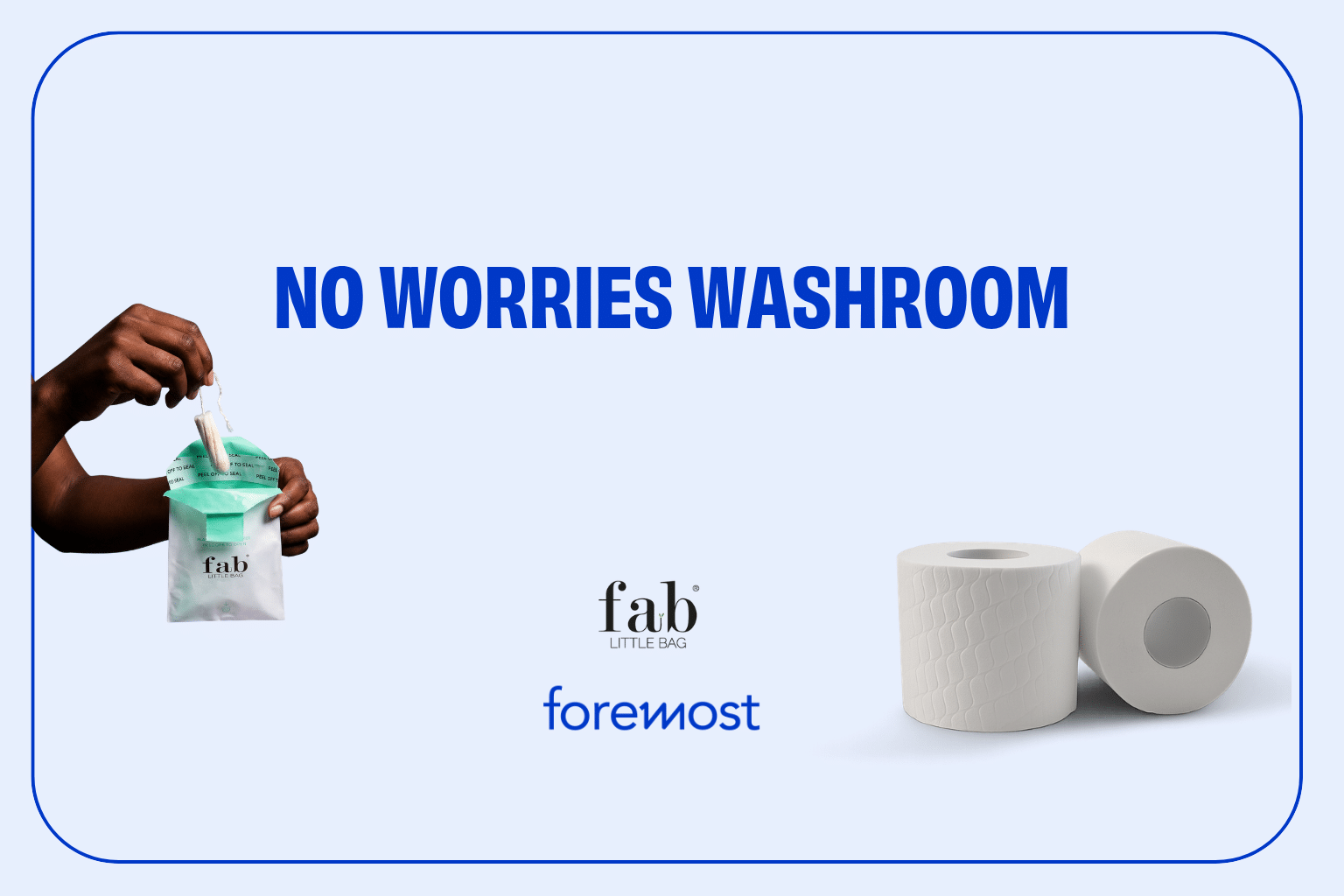
No Worries Washroom is Foremost’s sugarcane tissue, which dissolves in four seconds, alongside FabLittleBag’s disposal bags, made from 60% sugarcane, 10% cornstarch, and 30% recycled plastic.
The tissue reduces the mechanical risk to drainage systems, and the bags give users a genuinely accessible alternative to flushing sanitary products, which removes the most common cause of blockages in female washrooms.
Neither product asks users to change their behaviour in a way that requires effort or awkwardness.
The bag is one-handed, opaque, and sealable, and it fits into any bin.
That matters because disposal solutions that are fiddly or conspicuous don’t get used, and unused products don’t prevent anything.
The sustainability angle
Both products reduce reliance on virgin materials; the tissue moves away from wood pulp, the bags avoid virgin plastic, and that’s increasingly relevant beyond the environmental case.
Procurement teams across the public and private sectors are under growing pressure to demonstrate ESG credentials in their supply chains, and cleaning contractors are frequently asked to evidence the sustainability profile of the consumables they specify.
Products that carry genuine environmental credentials, rather than vague green language, are becoming crucial in contract conversations rather than a USP.
The operational and sustainability cases point in the same direction here, which is relatively unusual. Preventing blockages means fewer call-outs, less material waste from reactive repairs, and longer infrastructure life. That’s a reasonable proxy for reduced environmental impact, as well as a straightforward commercial argument.
Education settings deserve a specific mention
Schools and universities present a different kind of opportunity- the maintenance case is there but there’s also something more significant available.
Young people who are given clear, accessible disposal options in school washrooms are more likely to develop habits that carry forward.
It’s a small intervention with a disproportionately long tail, and it sits naturally alongside the sustainability commitments that most educational institutions are now publicly signed up to.
The washroom is rarely where those commitments are operationalized, yet it probably should be.
- For cleaning contractors, the value of a prevention-focused washroom approach isn’t just in reducing reactive callouts.
- It’s in what that approach signals to clients.
- A contractor who comes to the table with a solution to a recurring problem, rather than waiting to be asked, is demonstrating something different from schedule adherence and task completion.
- Washroom blockages are one of those operational issues that irritate facilities managers out of proportion to their actual cost, because they’re visible and disruptive, and they keep coming back.
- Solving that problem, before the next invoice arrives, is the kind of thing that ends up in a contract renewal conversation.
We have partnered with The FabLittleBag Co. to bring a prevention-focused washroom solution to commercial, public sector, and education environments.
To find out how the No Worries Washroom applies to your operation, get in touch with the Foremost team.