Probiotic commercial cleaning solutions are gaining attention across the industry as businesses strive for fast, consistent, high-quality results. No client wants a “surface-level clean” that cuts corners — they expect a fresh, hygienic, and genuinely clean environment. For cleaning companies, reducing cleaning time and the frequency of required cleans provides a major competitive advantage, and these results speak louder than any sales pitch.
As you explore modern cleaning technologies, you’ve probably noticed the rising interest in probiotic cleaners, prebiotic cleaners, synbiotic products, and other biological and enzymatic solutions. You may be curious but uncertain about the higher cost per litre and wondering:
- Will these products fit my budget?
- Are they really as effective as claimed?
- How will they impact performance and client satisfaction?
This guide breaks down exactly what probiotic cleaners are, how they work, and why Probiotic Commercial Cleaning Solutions are quickly becoming the most effective, sustainable, and time-saving option for professional cleaning businesses.
What are Probiotic cleaners?
Probiotic cleaners contain living “good” bacteria that colonise surfaces and outcompete harmful bacteria. Probiotic literally means “for life”. Once applied, these beneficial bacteria continue working long after you’ve finished cleaning — helping to reduce the presence of harmful microorganisms on desks, countertops, floors, and touchpoints.
What about prebiotics and synbiotics?
- Prebiotics are natural sugars that act as food for the probiotics, helping them multiply.
- Synbiotic cleaners combine probiotics and prebiotics to deliver an even longer-lasting clean.
This combination ensures hygiene is maintained well beyond the moment of application.
How Probiotic Cleaners Remove Dirt, Grime and Odours
Unlike traditional chemical cleaners that stop working once they dry, probiotic cleaners keep cleaning for up to 72 hours.
Here’s how:
- Probiotics release enzymes that break down organic dirt and soil.
- The bacteria then consume these broken-down particles — effectively removing grime at a microscopic level.
- This process repeats, allowing the bacteria to clean deep into grout, cracks, pores and crevices.
- Odours disappear naturally as their source (organic waste) is eliminated.
This makes them ideal for deep cleaning, commercial washrooms, kitchens, schools, care homes, and anywhere odour control is essential.
Do Probiotic cleaners actually work?
Yes — and scientific studies back this up.
Research in 2016 showed that probiotic cleaning products help reduce the emergence of drug-resistant bacteria in hospitals. A 2018 study found that probiotic cleaners significantly limit growth of dangerous bacteria.
The old idea of “kill 99.9% of bacteria” is fading. Probiotic cleaning works with nature, not against it — maintaining a healthy balance of bacteria rather than carpet-bombing every surface with harsh chemicals.
What Probiotic Cleaners Are Best At
Probiotic cleaners excel in several key areas:
- Deep cleaning hard-to-reach areas
Their self-replicating action allows them to reach deep into cracks, grout lines and pores that traditional cleaners never fully reach. - Long-lasting odour elimination
They remove odours at the source, which is why probiotic air-freshening systems are among the most effective deodorising solutions available. - Fogging and air quality improvement
Probiotic fogging helps reduce harmful bacteria in the air and on surfaces. - Sustainable, eco-friendly cleaning
They’re biodegradable, non-toxic and safe for people, surfaces, and the environment — ideal for businesses aiming for greener cleaning practices.
What Probiotic Cleaners Can’t Do
While incredibly versatile, probiotics aren’t a perfect replacement for every cleaning product.
They are not suitable as descalers because they do not contain acids (acid would kill the good bacteria).
They also cannot act as sanitisers or disinfectants, as these products are designed to kill bacteria — including the beneficial ones probiotics rely on.
For this reason, most companies use probiotics as part of a balanced, modern cleaning system.
Are Probiotics practical and easy to use?
Absolutely. You use them almost exactly the same way as traditional cleaners.
The only difference is with spray-and-wipe methods:
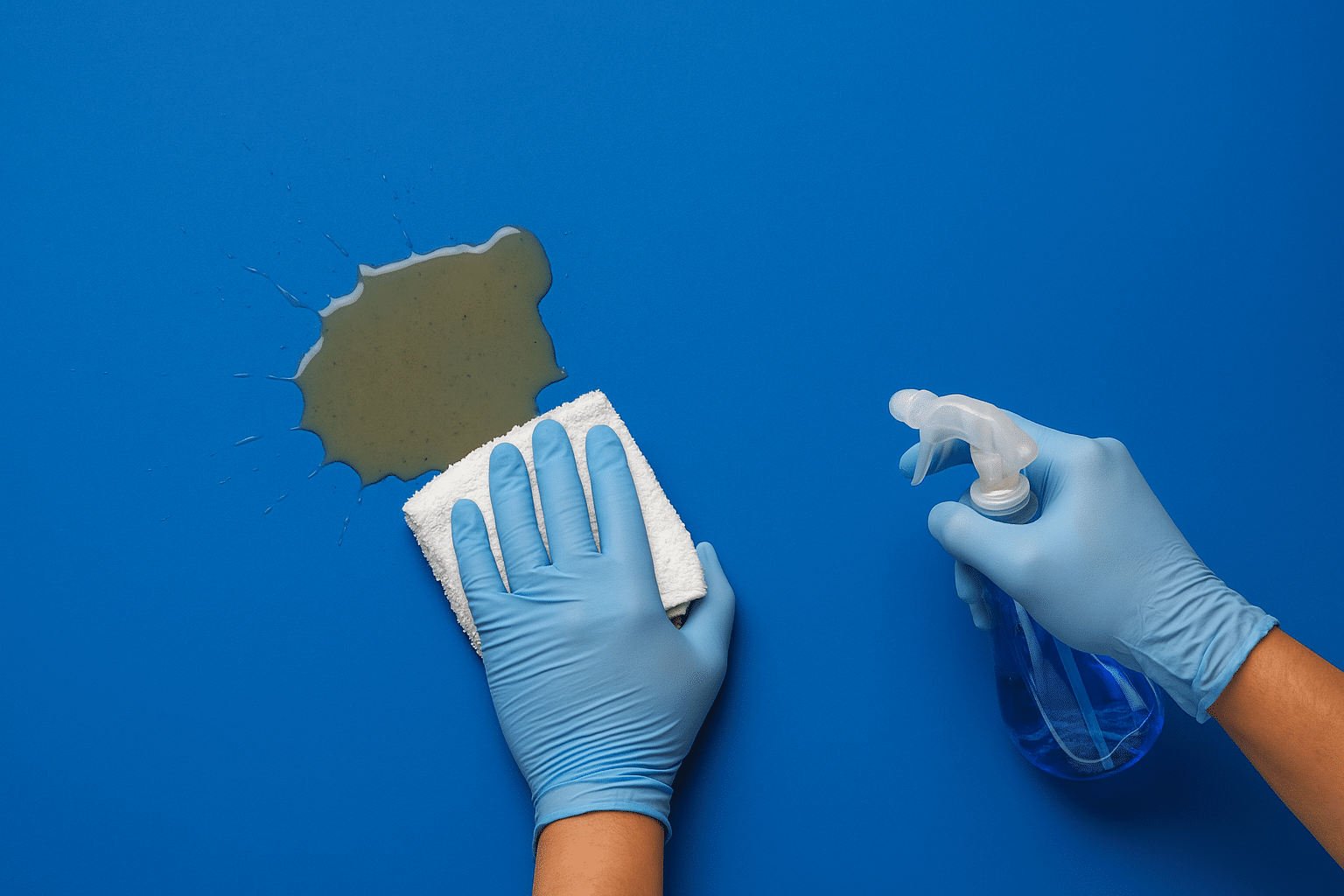
You spray, wait a couple of minutes, and then wipe to spread the solution — not to remove it. This allows the probiotics to stay on the surface and continue working.
Probiotic cleaning products are available as:
- Multipurpose cleaners
- Food-safe kitchen cleaners
- Odour-control products
- Gum and stain removers
- Fogging solutions
If you’re unsure which products suit your site, just check the label or speak to our team.
Want to Switch to Probiotic Cleaning?
Get Expert Advice Today
If you’re ready to improve cleaning efficiency, deliver longer-lasting results, and adopt eco-friendly, sustainable probiotic commercial cleaning solutions, our team is here to help.