


How ergonomic janitorial products sustain productivity
Ever bought a cleaning product because it was the cheapest on the list, then found it shoved at the back of a cupboard a month later? This one's for you.
When people talk about cleaning team productivity, it's usually rotas, headcount and hours per site. Fair enough, that all matters. But there's something that gets missed a lot, and that's the kit itself. The stuff your cleaners are actually holding for a whole shift.
A heavy vacuum or a mop with a handle that's too short doesn't feel like a big deal on day one. By week six it's a different story. So that's what this post is about: why the janitorial products you pick matter far more over months and years than they do on the day you buy them.
So how big a problem is it, really?
Pretty big. Here's what the HSE's latest figures say about musculoskeletal disorders. That's the strains, sprains and wear-and-tear injuries in backs, necks, shoulders and arms.
That last one's the number to think about. Fourteen days. That's two weeks of sorting out cover, someone new having to learn the site, and the client probably noticing.
And this isn't just a general workplace thing. The NHS cleanliness standards actually say these injuries are the most common work-related health problem that cleaners report. Which makes sense when you think about how much bending, reaching and pushing the job involves. Most cases are backs (43%), or necks, shoulders and arms (41%).
It starts way before anyone gets hurt
Injuries are the bit that gets written down. Before that, you've got people just getting tired. And tired people work slower. It's not that they don't care. When your arms are aching, you don't push the machine quite as far, or you give the high shelf a quick once-over instead of a proper clean. You'd do the same. We all would.
That's why it's so easy to miss. It doesn't happen all at once. It's a bit here and a bit there, usually in the last hour of a shift.
What to actually look for
"Ergonomic" gets slapped on a lot of products, so here's what we'd check when you're choosing commercial cleaning supplies:
- How heavy is it? Not just what it says on the box. What it feels like after you've picked it up for the fiftieth time.
- Can you use it without bending? Adjustable handles make a massive difference, especially when your team aren't all the same height.
- Does it do more than one job? Every time someone swaps tools, that's more to carry and more time lost. It's a big part of why we brought in ACTIV8. It's one powerhead that switches between a stick vac, a battery backpack and a corded vacuum.
- Could a machine do the heavy bit? The NHS standards say to use mechanical help, like trolleys or automated cleaning, wherever you can. We wrote a whole post on robotics and cobotics in UK cleaning if you want to know where that's actually worth the money.
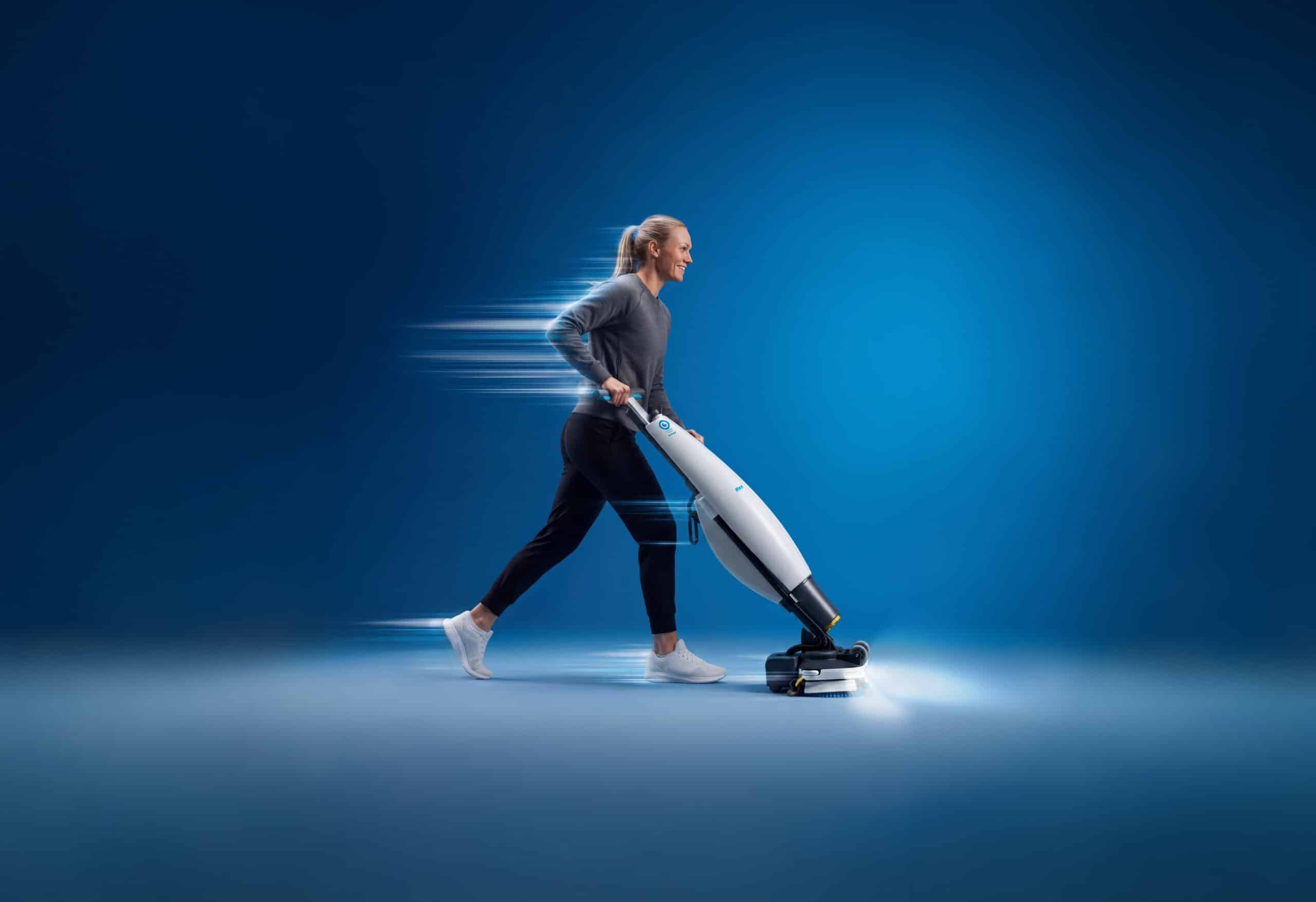
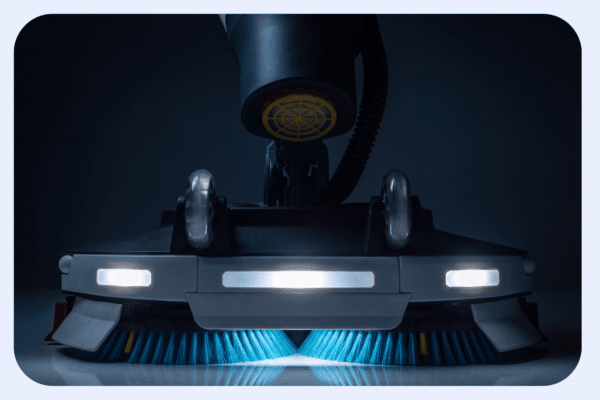
A good example of all this is the i-mop 46 from i-team, which came out at the start of October. Its spring system brings the weight you actually feel in your hands down from 3 kg to 0.7 kg. The handle adjusts to your height, and you park it with your foot, so there's no lifting the deck. i-team reckon cleaning a floor by hand takes around 350 movements. With the i-mop it's about 40. That's a lot fewer chances for something to start aching.
Then there's the chemicals
This one's easy to overlook. If your cleaners are pouring chemicals by eye, everyone's doing it slightly differently. Some go heavy, some go light. Too much and you're wasting product and the floor ends up sticky. Too little and it doesn't clean properly, so it has to be done again.
There's the lifting, too. Big heavy containers, decanting into bottles, carrying refills around. It all adds up.
If every dose is already measured out, that problem just goes away. Everyone gets the same result, whoever's on shift. That's a big part of why we launched LEAF. They're pre-dosed sheets that dissolve in water, so there are no bottles to lug about and nothing to measure.
Same products on every site
This sounds a bit boring, but it really does help. If all your sites use the same range, you only have to train people once. New starters pick it up quicker, cover staff know what they're doing when they turn up, and if something isn't working you can actually tell, because you're comparing like with like.
Is it worth the money?
If you're just comparing price per item, ergonomic kit can look like the pricier option. But think about what you get back:
- Fewer days lost to people being off with aches and injuries
- Cleaning that's just as good at the end of a shift as at the start
- Less chemical wasted, and fewer jobs done twice
- One range to train everyone on, not a different one at every site
- A team that doesn't go home sore every night, so they're a lot more likely to stick around
Honestly, the cheapest product on the list isn't that cheap if it ends up costing you a fortnight of someone off sick.
If you want somewhere to start
- Ask your team which job hurts the most. They'll tell you straight away. The Federation of Master Cleaners says this works best when staff are involved, which makes sense, because they're the ones doing it.
- Have a go at that job yourself for ten minutes, with their kit. You'll get it pretty quickly.
- Ask each site how they measure their chemicals. If someone says "depends who's in", there's your problem.
- Try to get every site on the same range of products.
- Ask your team again in three months and see what's changed.
Want us to take a look?
Send us what your teams are using at the moment and we'll go through it with you. We'll tell you what's working, what isn't, and what we'd change.

Got a few more minutes? Have a look at some of our other posts just below.
How ergonomic janitorial products sustain productivity
Get in touch How ergonomic janitorial products sustain productivity Ever bought a cleaning product because it was the cheapest on the list, then found it
The original keeps moving: meet the i-mop 46
Book a demo The original keeps moving Meet the i-mop 46 MODULAR. It’s a full-size scrubber dryer with the flexibility of a mop, and it
Introducing LEAF: plastic-free cleaning sheets that replace a shelf of bottles
Introducing LEAF: plastic-free cleaning sheets that replace a shelf of bottles Foremost is launching Leaf, a range of pre-dosed, dissolvable cleaning sheets that cut shipped