


Delivering measurable environmental progress
Our 2025 Sustainability Report is out. It shows what we've achieved, how we got there, and where we've still got work to do.

Anyone can say they care about sustainability. It's a lot harder to show it. And your clients know that, which is why the questions you're getting are tougher than ever. They want carbon reductions they can evidence, a supply chain they can understand, and decisions that hold up when procurement teams start digging.
So that's how we've written this year's report. Not big promises. Just what we measured, what changed, and what didn't go as far as we wanted. As our Managing Director, Darryl Penson, puts it in the report, real progress comes from measuring properly, not from making claims that can't be backed up.
It covers January to December 2025. Here are the headlines.
The carbon numbers, in plain English
The main number we track is emissions per delivery. It tells us how much carbon goes into getting each order to you, so it stays fair as the business grows. In 2025 it fell by 9%, to 7.90 kgCO2e per delivery, and the aim is to bring it down again every year.
Our total emissions for the year were 341 tonnes, covering Scope 1, 2 and 3. In 2023, that figure was 1,900. Our electricity is now 100% renewable, backed by REGO certificates, and we've put in more efficient lighting and heating too.
Less going in the bin
We now follow a simple rule with waste: cut it first, reuse what we can, recycle the rest. That, along with our closed-loop systems, is how we've sent 75% less to landfill.
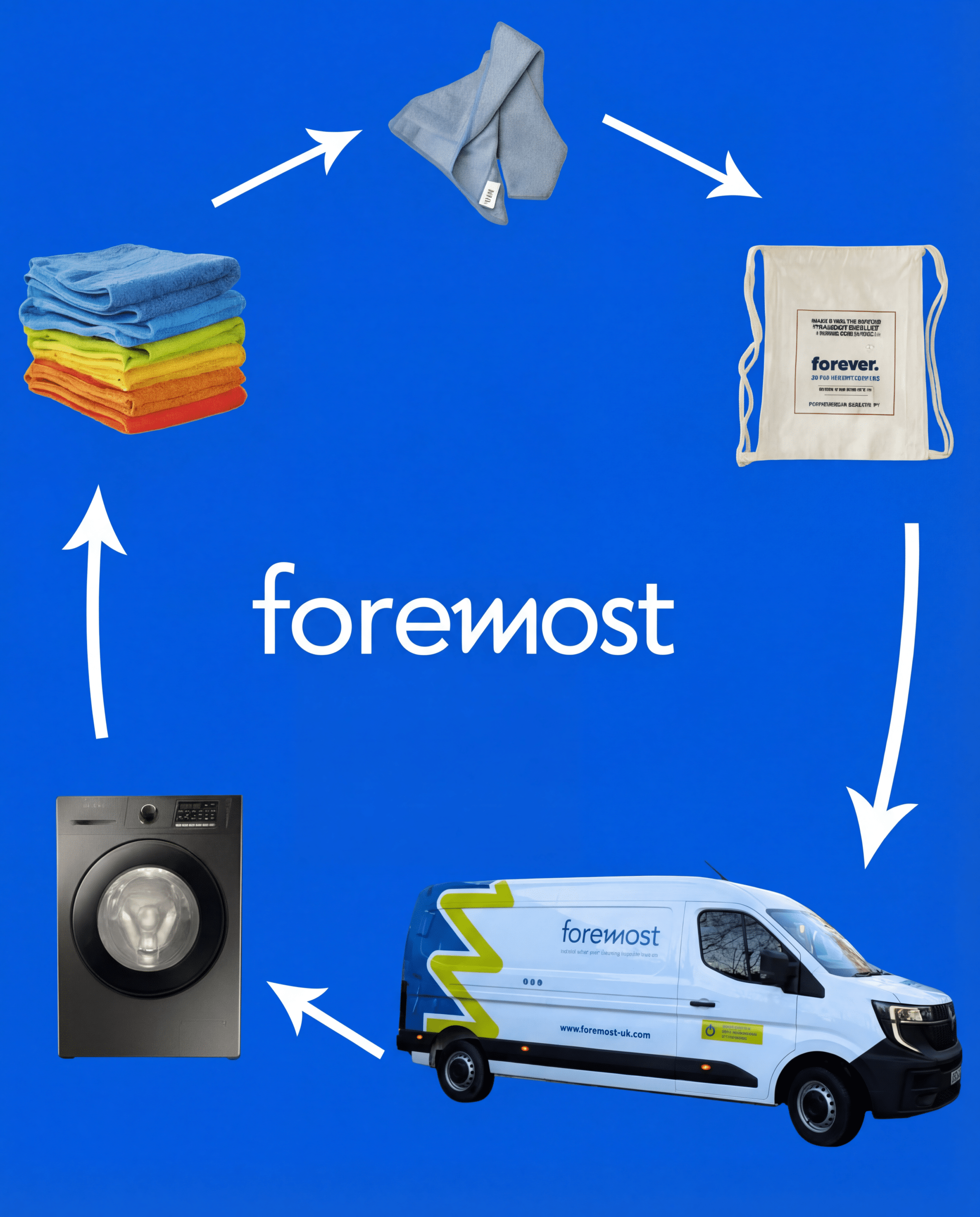
A closed-loop system just means keeping products and packaging in use for as long as possible, so they get collected and reused or recycled instead of thrown away. Our Ecobox packaging is reused, our Forever Cloths replace disposable ones, and in the office a food digester turns our food waste into compost in around 24 hours.
Helping our customers prove it too
This is the part we're most proud of, because it's where our work turns into your results. So far, we've made sustainable product recommendations for 21 key customers, covering more than 2,500 sites.
For our key accounts, sustainability is a regular part of the Quarterly Business Review. We look at the risks we can spot for each customer, using our Scope 1, 2 and 3 reporting, life cycle assessments on individual products, and data from our suppliers. Then we suggest product switches that bring your impact down, so you've got real figures to show your own clients.
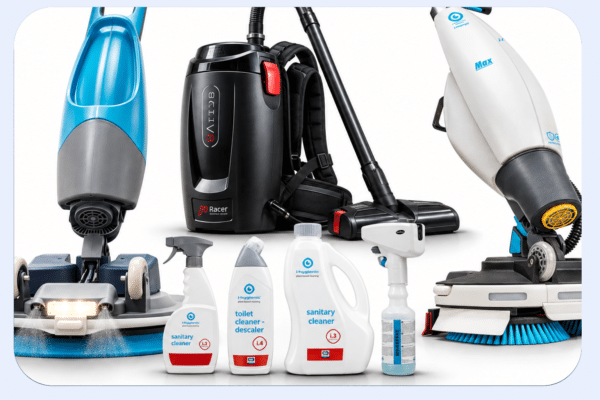
On top of that, every month we bring customers something new that removes waste, harm or work. Each one is picked for what it does for the planet as well as how well it cleans. Here are five we've brought in recently, including LEAF, our plastic-free cleaning sheets.
Knowing what's in our supply chain
Most of a supplier's carbon sits with the products it buys in, so we've been pushing hard here. 80% of our supply chain now reports Scope 3 emissions at product level, and 62% of our materials come from suppliers with a recognised sustainability certification. We're aiming for 75% by the end of 2026.
Every supplier has to sign up to our Supplier Code of Conduct, which covers human rights, the environment and anti-bribery. In 2025 we set a target of 100% compliance, and we hit it.
Quantum: all the data in one place
Quantum is our platform for pulling together all the information behind a cleaning operation. Supply chain and usage data, cleaning performance, training and compliance, and site details, all in one place. It started life as ForeThought, which we showed at the CSSA Innovation Showcase in 2025, and it's grown from there. The report explains how it works.
Where we've still got work to do
We'd rather be honest about this than pretend it's all sorted. Our biggest challenge is the same one most of the industry faces: Scope 3. That's the carbon in the products we buy and move, and it's by far the largest part of our footprint. Getting better data out of the supply chain is slow, steady work.
So that's where a lot of our focus is going next. We'll extend our supplier audits to second- and third-tier suppliers by 2027, and improve how we collect data on things like commuting, waste and transport.
What we've committed to next
We're working towards becoming a net-zero company by 2031. Along the way, we've set ourselves some clear targets. We want to cut single-use products and packaging in our value chain by 65% by 2027, and we're on track. We're also aiming to halve our Scope 3 emissions by 2027, move to 100% renewable energy sources by 2028, and give full visibility of supply chain audit data across all our goods and services during 2026.
There's plenty more in the report too, from the 1% of our revenue we give to charity to our partnership with In Kind Direct, the hygiene poverty charity.
See the full picture.
Download the 2025 report to see all the results, how we got them, and where they could help with your own sustainability goals. Want to talk it through? Give us a call.
Or get in touch online
Still curious? There's more from our blog just below.

Foremost 2025 Sustainability Report: measurable environmental progress
Download the report Delivering measurable environmental progress Our 2025 Sustainability Report is out. It shows what we’ve achieved, how we got there, and where we’ve
5 products changing the way operatives work
Book a demo 5 products changing the way operatives work From taking the effort out of vacuuming to making chemical dosing simpler, here’s some of
Introducing the FoamGun Pro
Book a demo Introducing the foamGUN PRO For decades, the humble trigger spray has relied on one small, unpaid member of staff. Here’s what happens