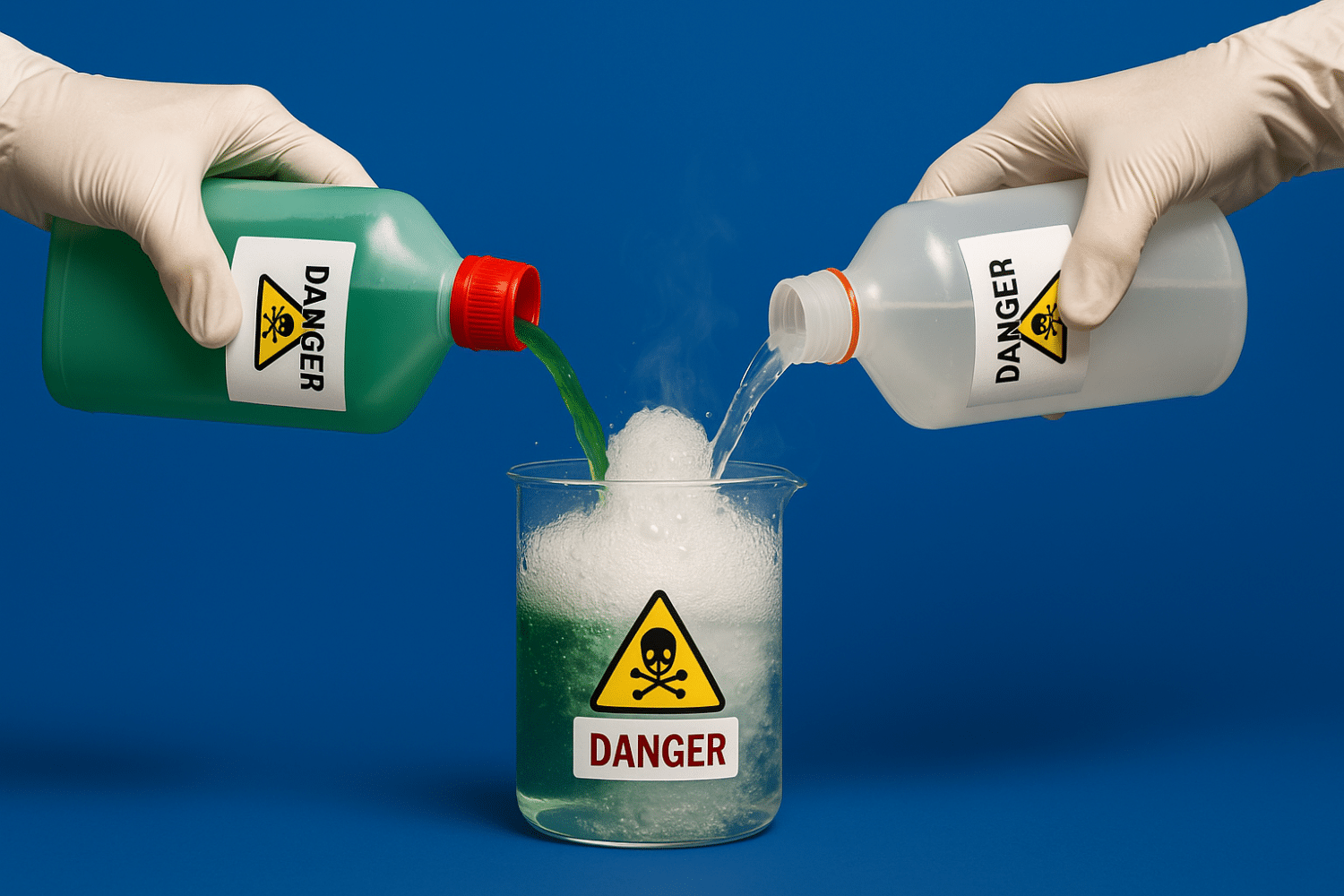


Chemical Safety Guide: Why Mixing Cleaning Products Creates Dangerous Reactions
Foremost
The powerhouse behind pioneering cleaning companies
To put it simply: Don’t mix chemicals
Why? you might ask…
Quite simply, because not all chemical reactions are visible to the human eye, but can be just as dangerous as it would be if it blew up right in front of your face.
Bleach + Acid = Chlorine gas
Used in chemical warfare since World War One (1914-1918), exposure to Chlorine Gas can lead to coughing and other breathing problems as well as burning and watery eyes. Perfect for distracting the enemy from their aim in warfare, exposure to Chlorine gas is likely to have life-long effects.
Identification
Yellow-green gas with strong odour which drops to lower levels because it is heavier than air.
Bleach + Ammonia = Chloramine
This can cause shortness of breath and chest pain. Cause irritation to nose and throat. Irritate the lungs, causing coughing and/or shortness of breath. Higher exposures can cause a build-up of fluid in the lungs. This is called pulmonary oedema and is a medical emergency with severe shortness of breath.
Identification
Yellow to clear liquid with a strong odour.
Bleach + Rubbing Alcohol = Chloroform
Used as a anethesetic (sedative for medical purposes) since 1847, this gas can send you ‘to sleep’ in seconds.
Chloroform is another one of those highly toxic combinations! It can harm the eyes, skin, liver, kidneys, and nervous system. Chloroform can be toxic if inhaled or swallowed. Exposure to chloroform may also cause cancer.
Identification
A colourless liquid that quickly evaporates into gas
Hydrogen peroxide + Acid = Peracetic/ Peroxyacetic acid
(well done if you can pronounce this one!)
Introduced in 1988 to sterilise endoscopy tubing (used for medical endoscopy procedures), this is a highly caustic chemical which is highly corrosive and irritating to;
– the eyes
– mucous membranes of the respiratory tract
– skin
Exposure to lethal concentrations of peracetic acid causes haemorrhage (internal/external bleeding), oedema (swelling), and consolidation of the lungs (blocking of the air pipes from mucus, blood, etc.).
Whereas, exposure to nonlethal concentrations cause short-term weight loss or gain, lacrimation (excessive tears), extreme discomfort and irritation to the upper respiratory tract (nose, mouth, throat, voice box, etc.) after exposure of only 3 minutes!
Identification
A colourless liquid with a strong odour
When it comes to cleaning, more doesn’t always mean better—and mixing products doesn’t make them stronger, just more dangerous. Even a few drops of the wrong combination can release toxic gases or create corrosive compounds that cause lasting harm.
So the next time you reach for multiple bottles under the sink, pause and remember: clean smarter, not riskier. Always read labels, use one product at a time, and make sure your space is well-ventilated.
Your health, your home, and your safety are worth more than a quick clean.
Stay informed, stay cautious, and never mix your chemicals.
If you’re ever unsure about mixing cleaning products or need guidance on safe chemical use, don’t take chances—contact us for advice before you mix.

Why the Cleaning Industry Needs Innovation, Not Just Products
Why the Cleaning Industry Needs Innovation, Not Just Products The commercial cleaning industry has always been good at producing products. Every year brings new chemicals,

The Supply Relationship That Quietly Makes or Breaks Your Cleaning Business
The Supply Relationship That Quietly Makes or Breaks Your Cleaning Business In commercial cleaning, most problems don’t start on the job.They start when the right

Choosing the Right Cleaning Chemicals for Different Surfaces
Choosing the Right Cleaning Chemicals for Different Surfaces Choosing cleaning chemicals is often treated as a straightforward purchasing decision. In reality, it’s far more complex.