

Aqueous Ozone for Professional Cleaning: Benefits, Applications & Safety Guide
Foremost
The powerhouse behind pioneering cleaning companies
Table of Contents
This Aqueous Ozone guide explains how a powerful disinfectant can be created from ordinary cold tap water without relying on harsh or harmful chemicals. Instead of storing multiple cleaning products, you can generate Aqueous Ozone on-site, right before cleaning, ensuring you never run out as long as clean water is available.
So, what actually happens to turn water into a disinfectant? Electricity is applied to O₂ to add an extra oxygen molecule, forming O₃. This ozone is then infused into cold water through a generator to create safe Aqueous Ozone.
What is Aqueous Ozone?
Aqueous Ozone is a chemical-free disinfectant produced using electricity that destroys germs, bacteria, and other contaminants. Although ozone gas itself can be harmful, Aqueous Ozone is very different and is certified safe by leading authorities worldwide. It is proven to be harmless to people and often safer than traditional chemical-based cleaners.
However, Aqueous Ozone has a relatively short average half-life of about 20 minutes, after which the solution loses around 50% of its effectiveness. This is why it is best produced immediately before use, as highlighted in any good Aqueous Ozone guide.
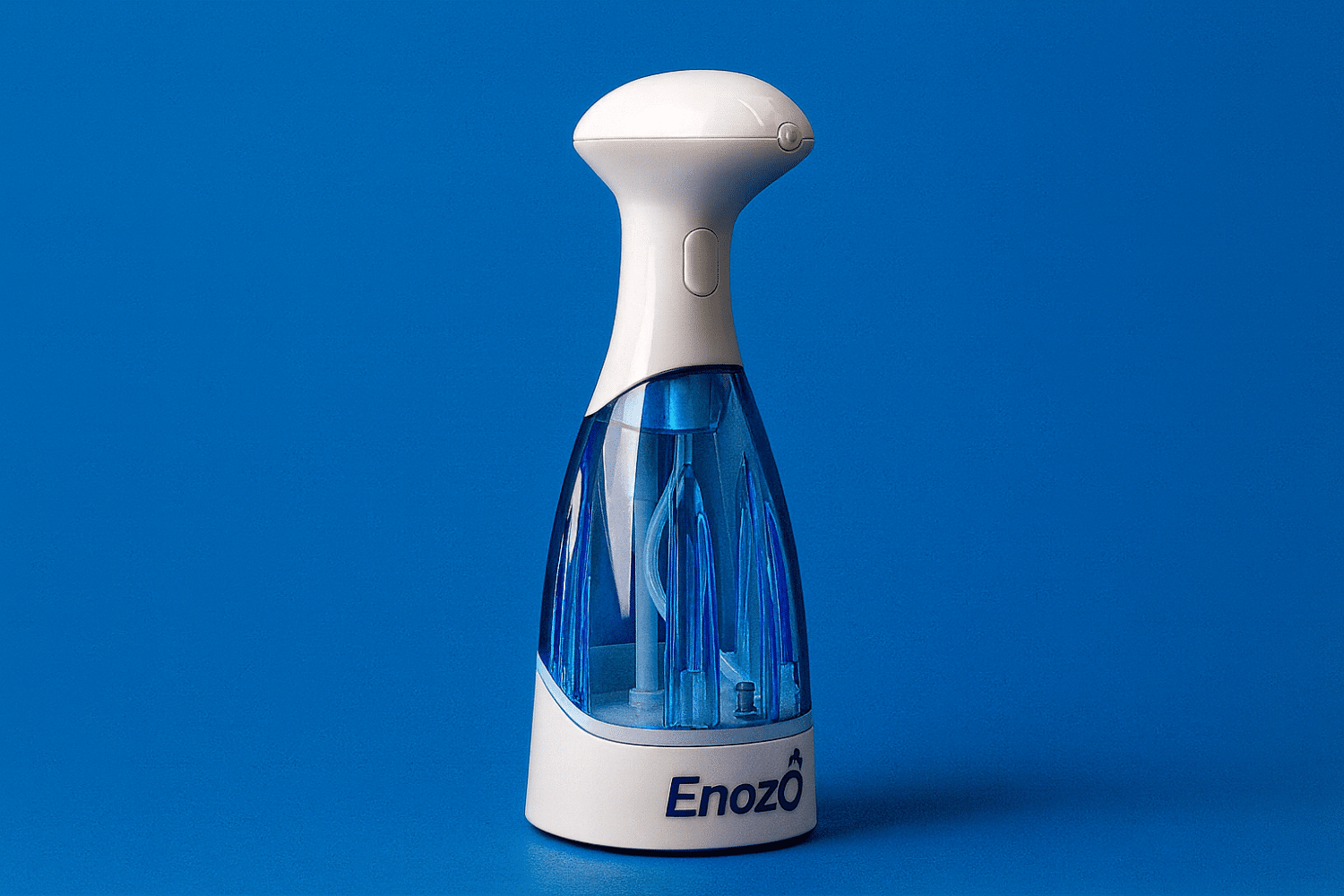
The EnozoPRO from Foremost
The EnozoPRO spray bottle turns ordinary tap water into Aqueous Ozone at the press of a trigger. With approximately 5,000 refills per bottle, it helps eliminate single-use plastic, frees storage space, and maintains full-strength disinfectant without the need for chemical refills.
Inside the bottle, Active Diamond Electrolytic Process Technology (ADEPT) passes water across a special electrically charged diamond plate, generating the Aqueous Ozone solution. Since the solution naturally loses potency over time, using it immediately ensures maximum cleaning performance.
What is Aqueous Ozone Good For?
Disinfection
Aqueous Ozone produced by EnozoPRO kills 99.9% of some of the most harmful bacteria when used as directed, making it ideal for everyday sanitisation.
Deodorising
It eliminates unwanted odours without the need for added fragrance or dyes, making it ideal for allergy-sensitive users.
However, Aqueous Ozone may not be the most effective choice for heavy degreasing or deep-cleaning tasks, as the large molecules struggle to penetrate deep oil and grease buildup
Is Aqueous Ozone eco-friendly and sustainable?
Yes. Aqueous Ozone contains no chemical additives and is harmless to the environment. It also reduces CO₂ emissions by eliminating repeated transportation and delivery of chemical products. Once used, it breaks down naturally into water and oxygen. Refillable bottles or fixed generators also remove the need for single-use plastics.
Is Aqueous Ozone safe?
Absolutely. It is residue-free, fragrance-free, allergen-free, non-irritating to skin and lungs, and contains no preservatives, making it safe for users, buildings, and the environment.
In summary, this Aqueous Ozone guide demonstrates how generating disinfectant on demand offers a safer, more sustainable alternative to traditional chemical cleaners. By using a system like EnozoPRO, cleaning teams can reduce plastic waste, avoid harsh chemicals, and still achieve highly effective sanitisation. It’s a smart and environmentally responsible solution for everyday cleaning tasks.

Why the Cleaning Industry Needs Innovation, Not Just Products
Why the Cleaning Industry Needs Innovation, Not Just Products The commercial cleaning industry has always been good at producing products. Every year brings new chemicals,

The Supply Relationship That Quietly Makes or Breaks Your Cleaning Business
The Supply Relationship That Quietly Makes or Breaks Your Cleaning Business In commercial cleaning, most problems don’t start on the job.They start when the right

Choosing the Right Cleaning Chemicals for Different Surfaces
Choosing the Right Cleaning Chemicals for Different Surfaces Choosing cleaning chemicals is often treated as a straightforward purchasing decision. In reality, it’s far more complex.